
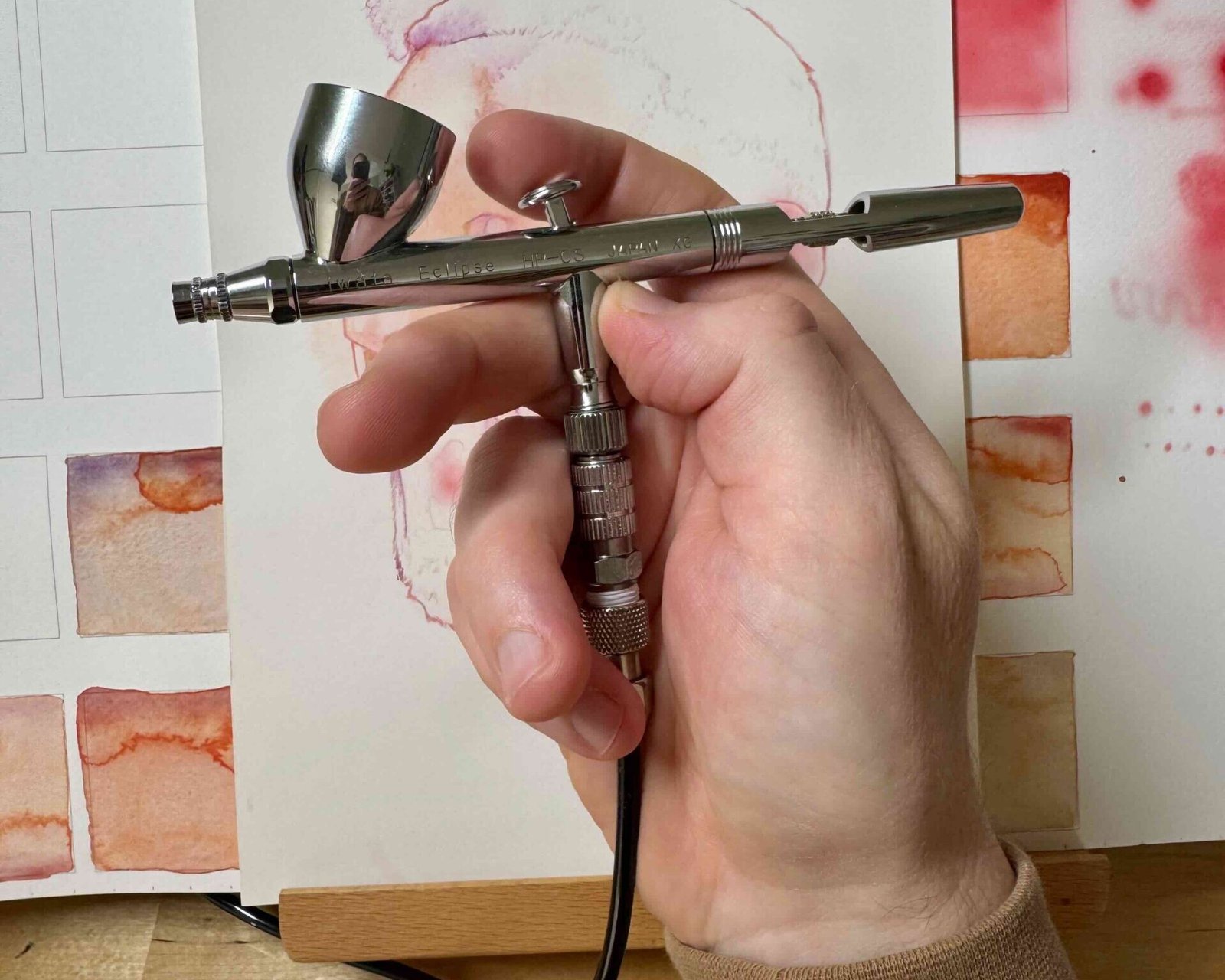
Iwata Eclipse HP-CS
I’ve just picked up an Iwata compressor and an Iwata Eclipse HP-CS airbrush — a great find on eBay, and the start of what I think is going to be a properly exciting shift in how I work.
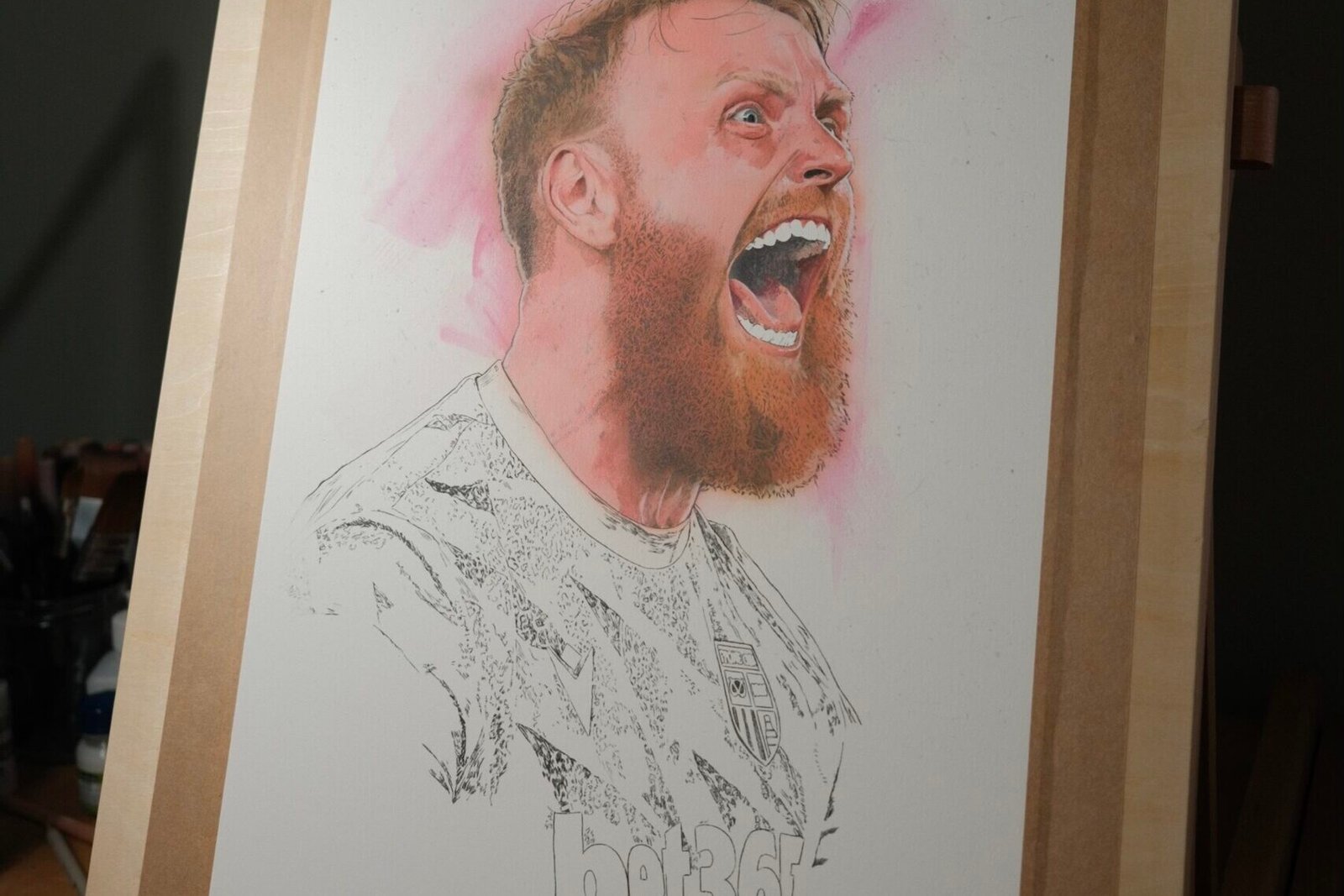
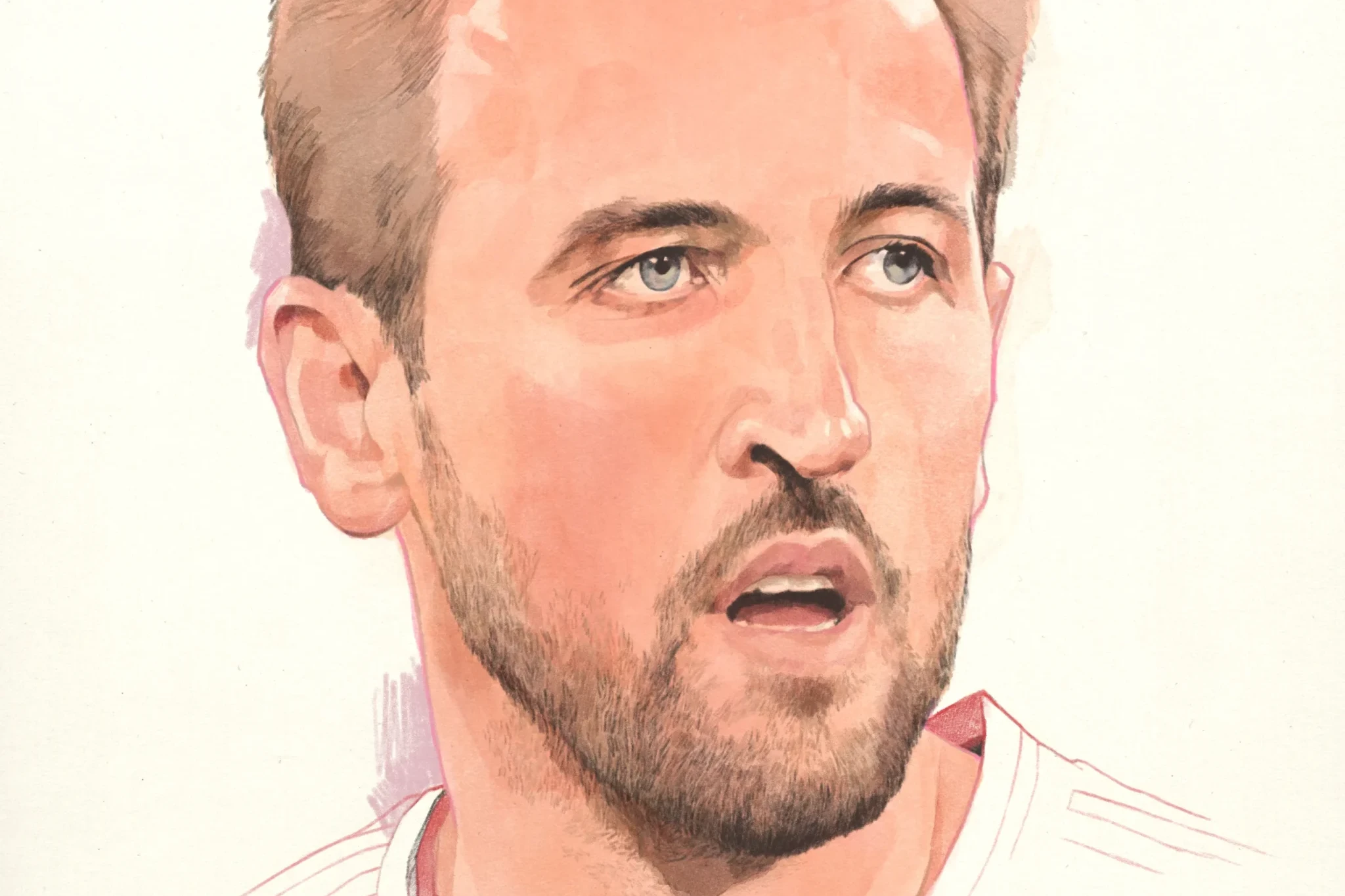
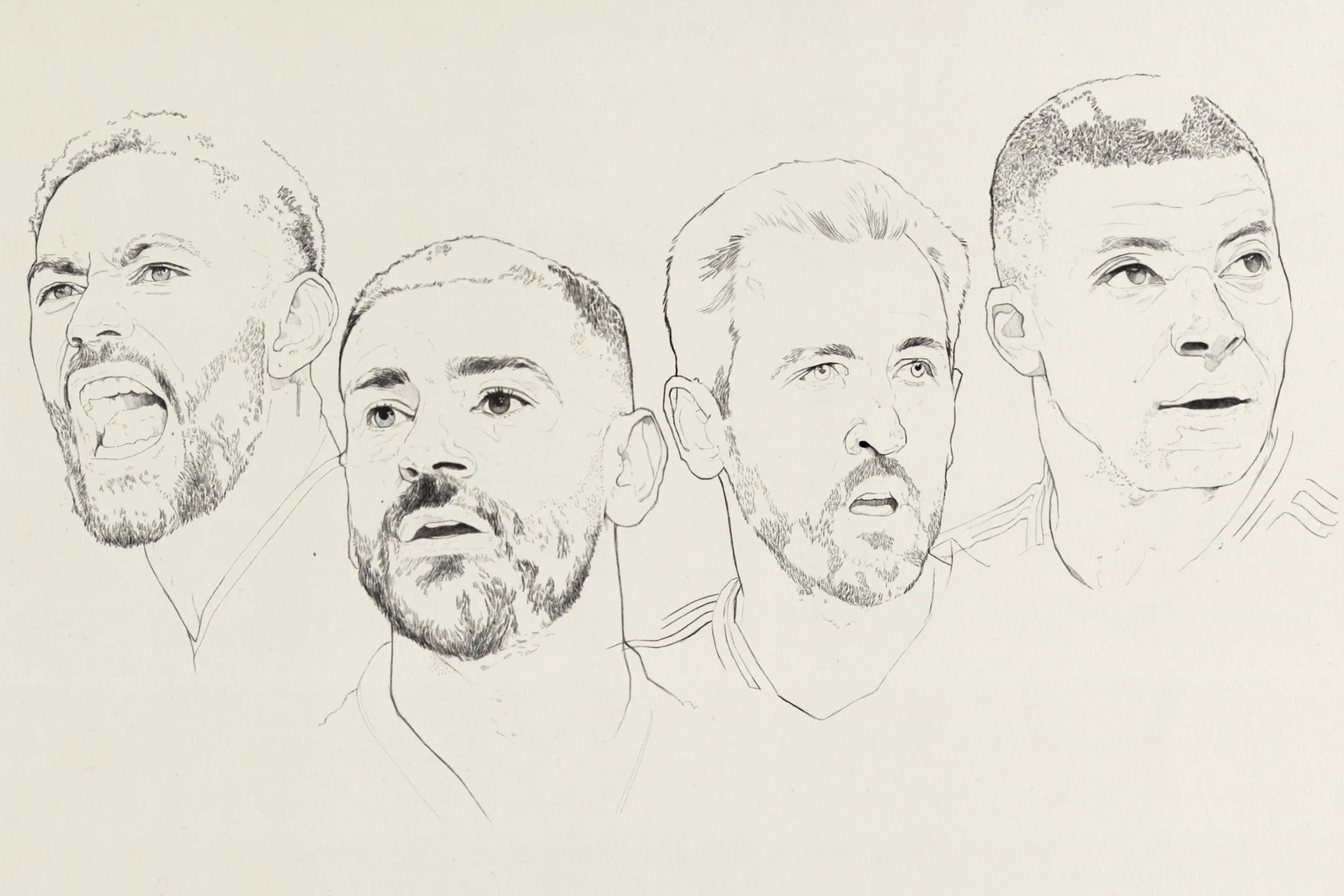
Airbrushing is completely new territory for me. My background is in watercolour on Arches hot pressed paper, refined with coloured pencil — a slow, controlled way of building colour through washes and glazes, then sharpening detail back in by hand. That’s the foundation I’m working from, but I can feel things shifting towards graphite and acrylic on gessoed board, a way of working I haven’t properly explored yet but is very much where this is heading. The airbrush is a different kind of tool altogether: faster, more fluid, capable of soft gradients and seamless colour transitions that are genuinely difficult to achieve with traditional media alone — though anyone who’s chased a smooth watercolour wash will recognise the same instinct behind it.
Where the Inspiration Comes From
This isn’t a random detour. I’ve been drawn to airbrushing largely through studying the work of two illustrators whose film poster art has shaped how I think about realistic portraiture: Mike Butkus and Drew Struzan.
Struzan in particular has such a distinctive process — graphite underdrawing built up on grey-gessoed board, airbrushed colour layered on top, then fine detail worked back in with coloured pencil. It’s a hybrid approach, combining the precision of traditional drawing with the smooth, painterly quality airbrush brings to skin tones, lighting, and atmosphere. Butkus’s posters carry that same sense of cinematic depth — the kind of soft realism that’s hard to fake with pencil alone, no matter how much blending you do.
That hybrid way of working is exactly where I want to end up — graphite, airbrush, and coloured pencil all feeding into each other rather than working in isolation. I’m not there yet; gessoed board and airbrushed colour are both new ground for me. But seeing how both artists treat the airbrush not as a replacement for drawing skill but as an extension of it is what’s pulling me in that direction, and ultimately what pushed me to get one of my own.
What’s Next
I’m genuinely looking forward to experimenting and figuring out where this fits into my process. There’s a learning curve ahead — pressure control, paint consistency, distance from the surface, all the fundamentals I’ll need to build up through trial and error. But that’s part of the appeal. I’d rather learn a new tool properly than rush it and become frustrated.
My plan is to start with some test pieces — getting a feel for the airbrush itself, then gradually bringing graphite and gessoed board into the mix alongside it. Coloured pencil will still have a role to play for fine detail, just as it does in my watercolour work now, but the rest of the process is all new ground!
More updates to come as I get the hang of it.
Have you made the jump from traditional media into airbrushing? I’d love to hear how you approached the learning curve.