
I’ve recently started work on a new portrait of Stoke City goalkeeper Viktor Johansson.
The reference caught a brilliant moment of pure emotion—the kind of expression that makes a football portrait feel alive before a pencil or paintbrush even touches the paper. I wanted to capture that intensity: the wide-eyed celebration, the movement in the hair and beard, and the energy running through the image.
Starting a football portrait
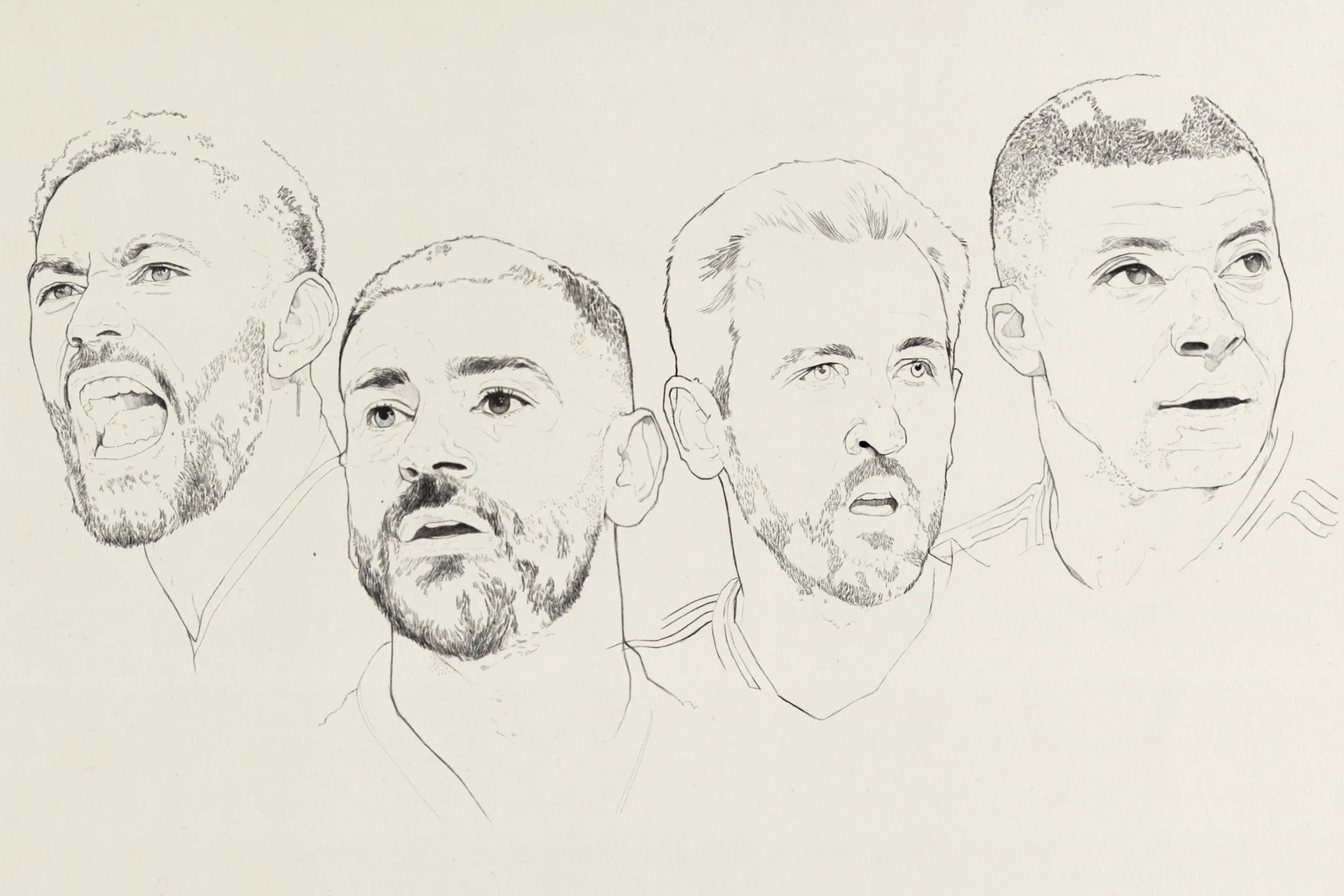
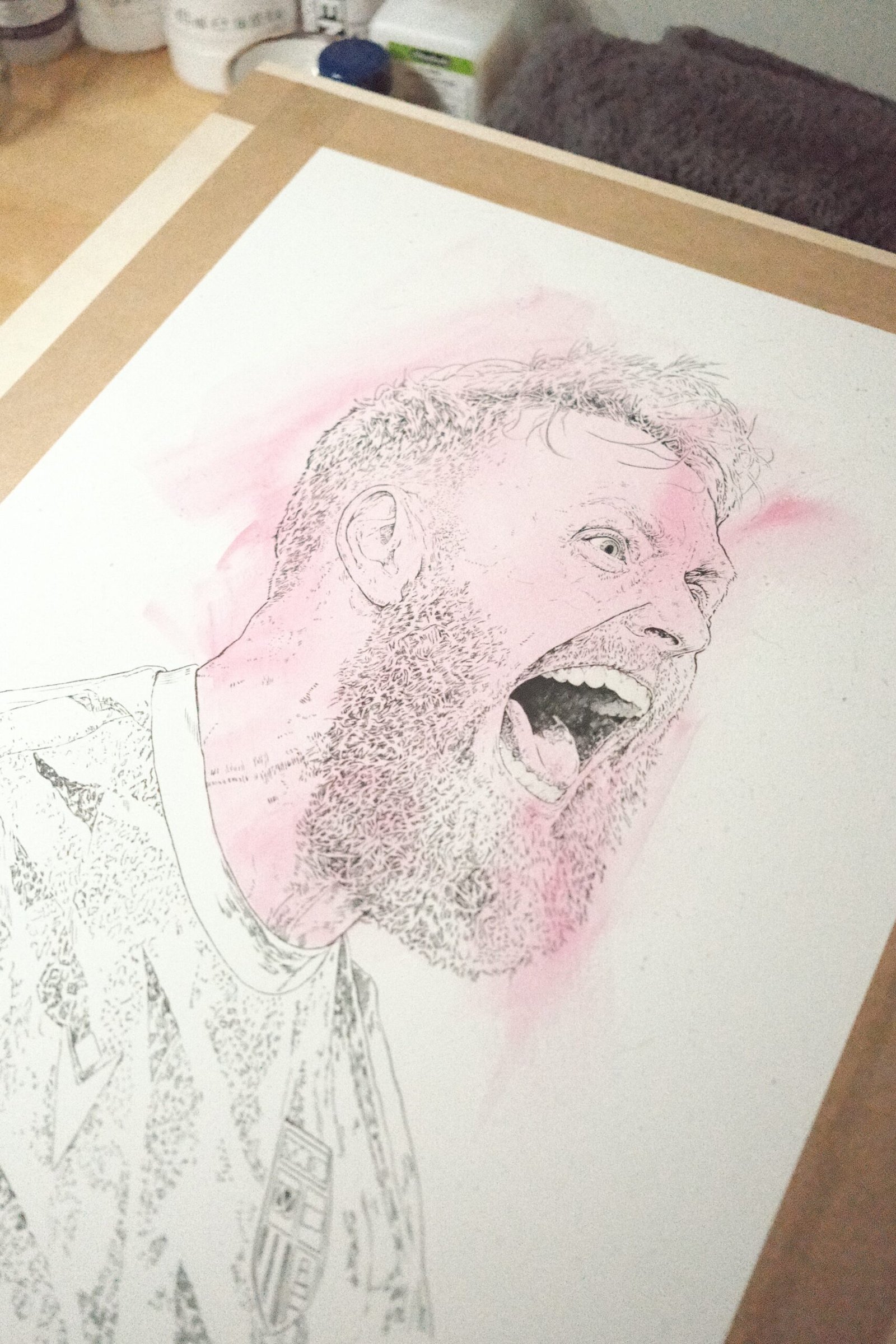
Every portrait begins with the drawing. For this piece, I spent time establishing the key shapes in Viktor’s face before committing to colour: the angle of the head, the expression around the eyes, and the open mouth are all doing a lot of the work. With a high-energy reference like this, getting those early relationships right is what helps the finished painting feel like a portrait rather than simply a detailed drawing.
Paper, pencil and early colour
I’m working on Fabriano watercolour paper, which gives me a good surface for building both delicate pencil detail and softer painted layers. It is especially useful for portrait work because I can keep the drawing crisp while gradually developing the skin tones around it.
For the linework and fine texture, I use Polychromos pencils. They are ideal for the small decisions that make a face feel convincing: the direction of the beard, the edge of the hairline, the creases around the eye, and the tiny changes in tone across the skin. At this early stage, I’m deliberately keeping some areas light so there is room to push the contrast later.
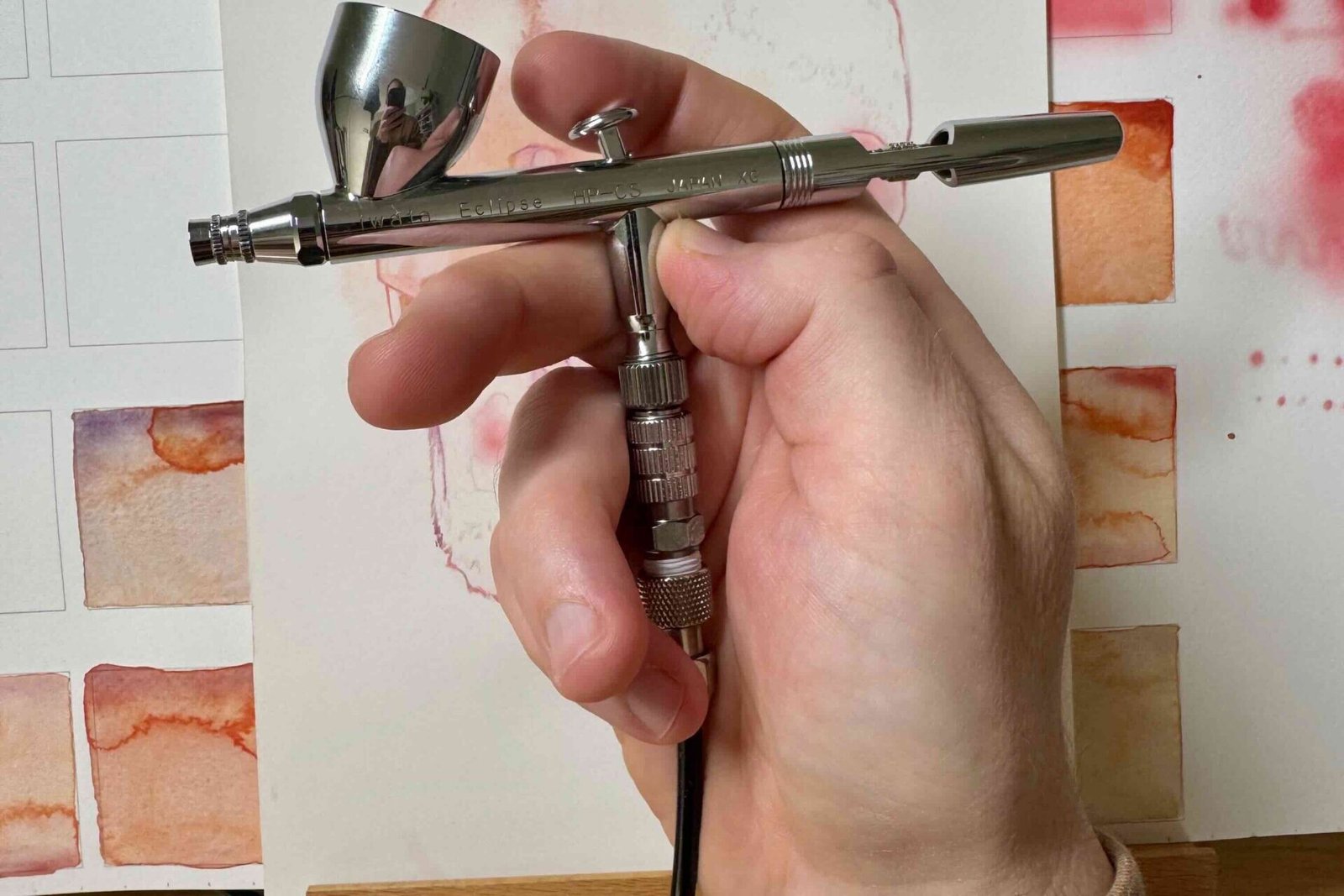
Using an Iwata Eclipse airbrush
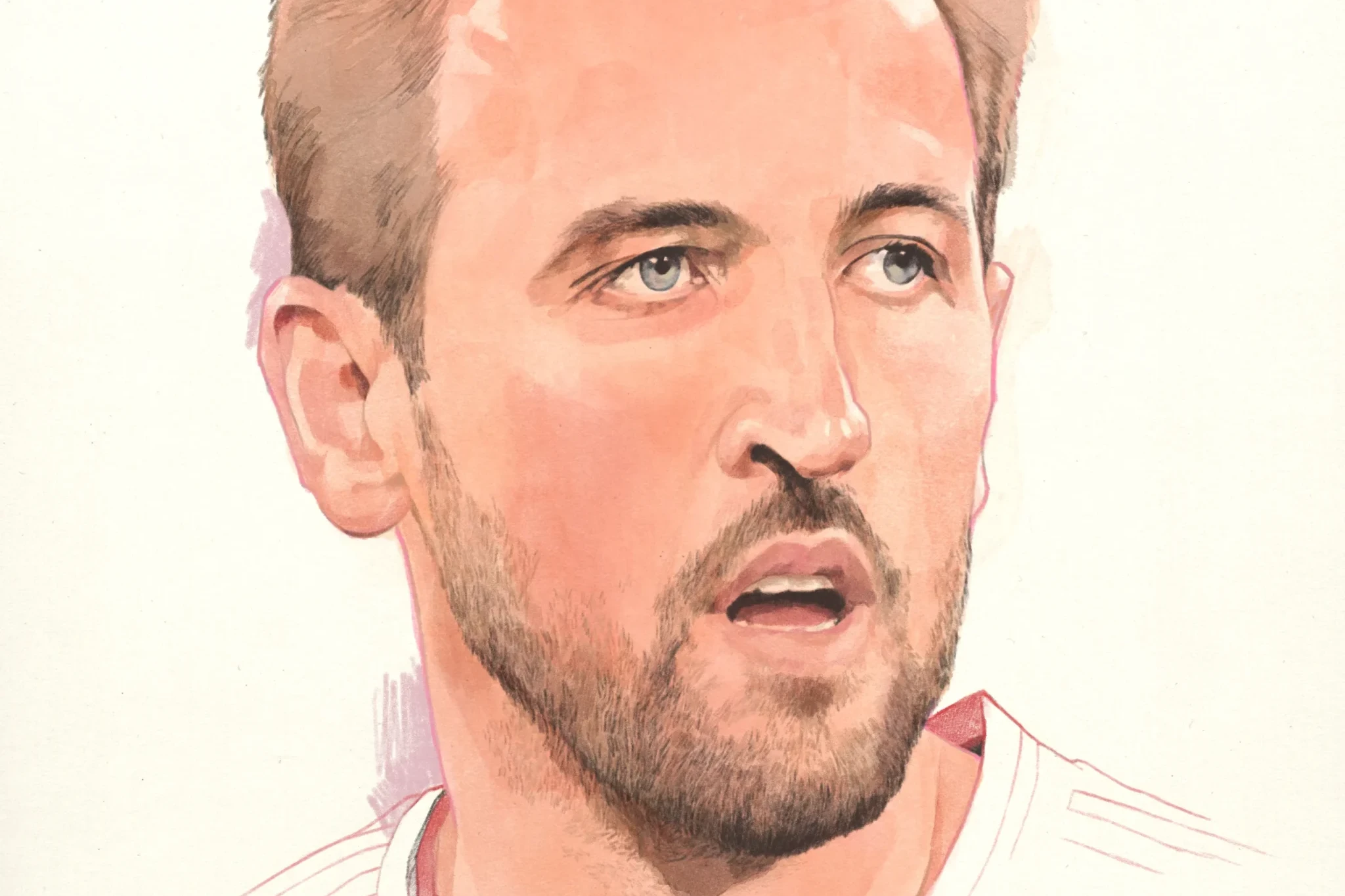
The first colour has been built with my Iwata Eclipse airbrush and Schmincke Aero Color paints. The airbrush lets me lay in very soft transitions across the face, particularly around the forehead, cheeks and neck, without losing the pencil drawing beneath. Schmincke Aero Color is great for this kind of work because the layers can stay transparent and gradual rather than becoming heavy too quickly.
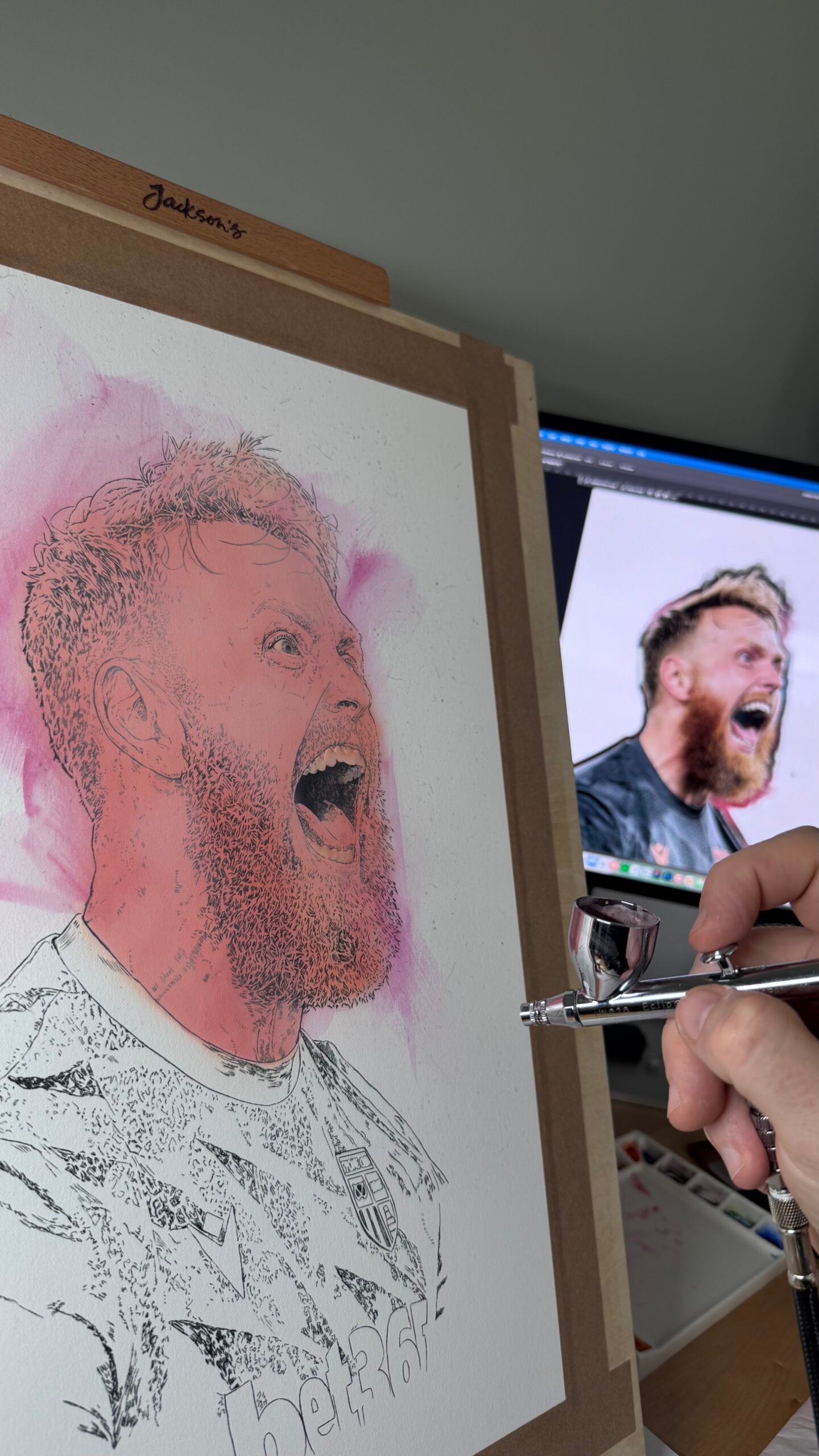
At the moment, the face is beginning to emerge from those first layers, but there is still plenty to do. I’ll return to the shadows around the beard and hair, develop the shirt and Stoke City details, and bring more depth into the background. The aim is to keep the energy of the original moment while giving the portrait its own painterly character.
What comes next
The next stage is about contrast and texture. I’ll be building darker values into the mouth, beard and shirt, then using the Polychromos pencils again to sharpen selected details over the airbrushed colour. This back-and-forth between pencil and paint is one of my favourite parts of making a watercolour and airbrush portrait: it allows the piece to stay loose in places while becoming very considered where it needs to be.
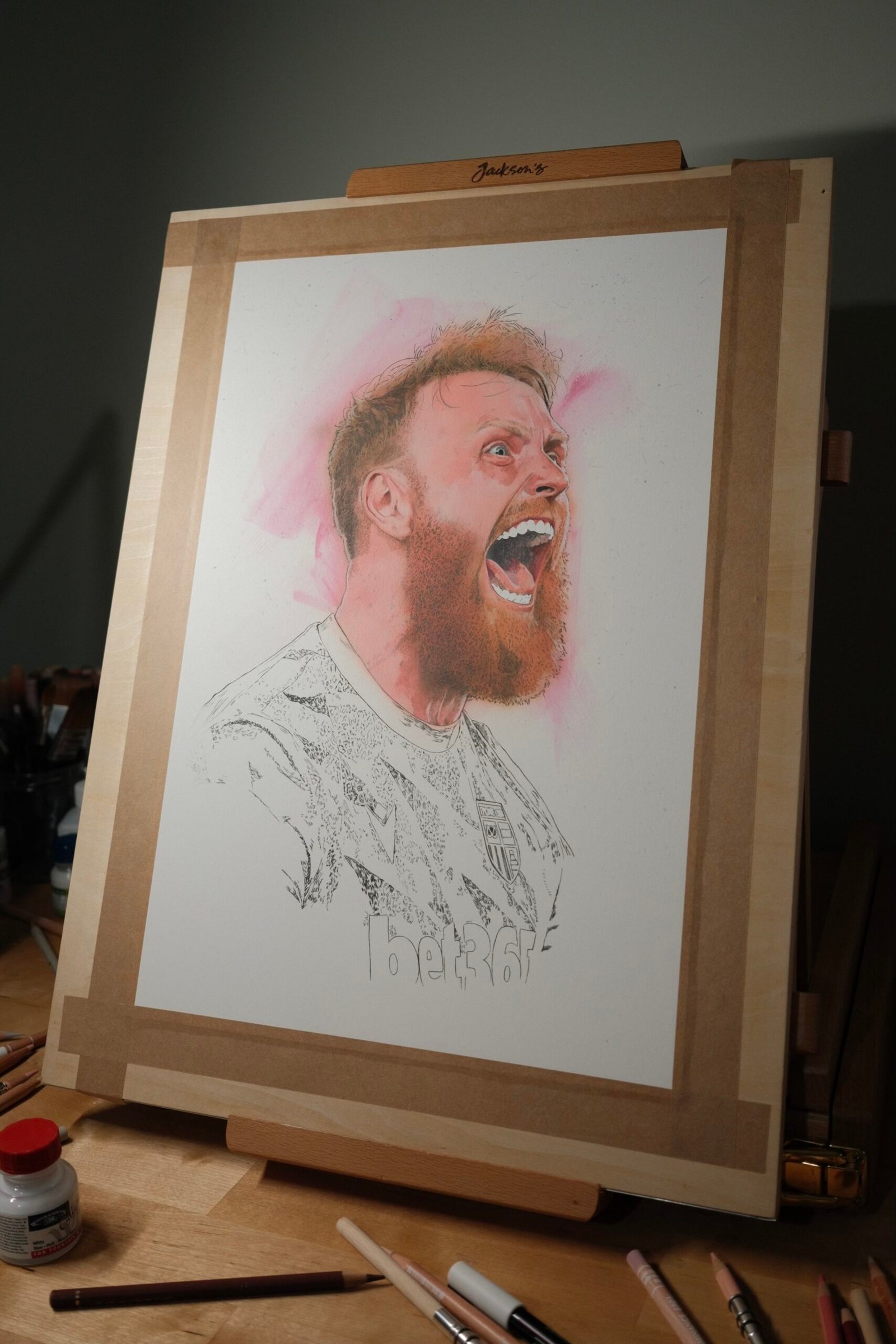
I’ll share another update once the next layers are in place. If you enjoy seeing how football portraits come together, you can find more portrait art and process posts on the blog.